Colors and Animals in Romanized Manipuri
Learning colors and animal names is one of the most enjoyable ways to build your Manipuri (Meiteilon) vocabulary. These words are used every day when describing people, objects, nature, pets, and the world around us. If you’re just starting to learn Romanized Manipuri, mastering these basic words will help you understand simple conversations and express yourself more confidently.
Why Learn Colors and Animals?
Colors and animals are among the first vocabulary topics taught in many languages because they appear in daily conversations.
Learning these words will help you:
- Describe people and objects.
- Talk about pets and wildlife.
- Improve your vocabulary.
- Build confidence in speaking.
- Understand simple Manipuri conversations.
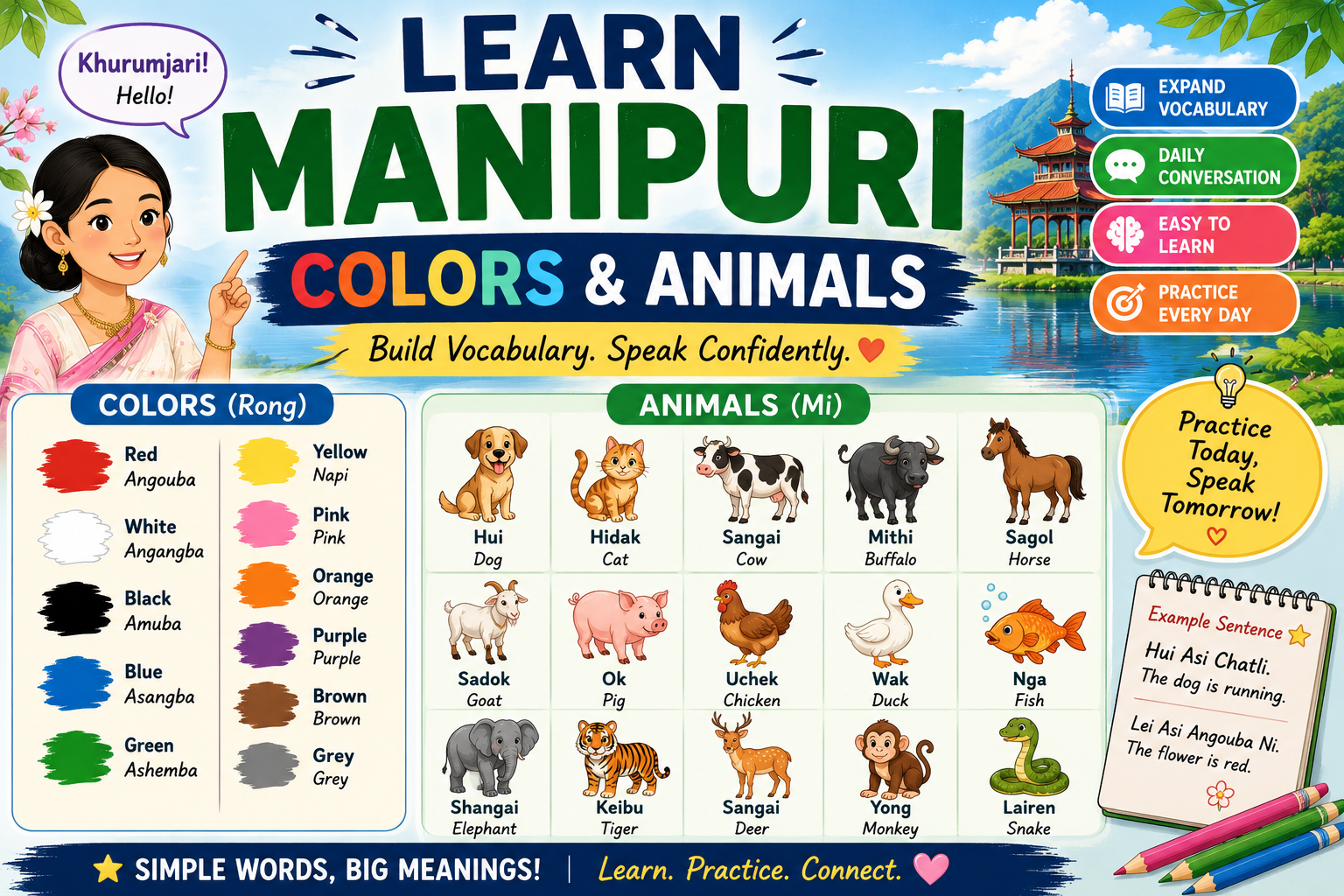
Common Colors in Romanized Manipuri
| English | Romanized Manipuri |
|---|---|
| Red | Angangba |
| White | Angouba |
| Black | Amuba |
| Blue | Asangba |
| Green | Ashemba |
| Yellow | Napu machu |
| Pink | khamen machu |
| Orange | komla machu |
| Purple | Purple |
| Brown | Brown |
| Grey | Grey |
Note: Some modern color names are commonly borrowed from English in everyday speech.
Example Sentences Using Colors
The flower is red.
Lei Asi Angangba Ni.
The shirt is white.
Shirt Asi Angoubani Ni.
The bag is black.
Bag Asi Amuba Ni.
The sky is blue.
Nong Asi Asangba Ni.
The leaves are green.
Lambi Lei Asangba Ni.
I like the red flower.
Ei Angangba Lei Pammi.
This book is blue.
Masi Book Asangba Ni.
That car is black.
Madu Car Amuba Ni.
Common Animals in Romanized Manipuri
| English | Romanized Manipuri |
|---|---|
| Dog | Hui |
| Cat | Hidak |
| Cow | Sangai |
| Buffalo | Mithi |
| Horse | Sagol |
| Goat | Sadok |
| Pig | Ok |
| Chicken | Uchek |
| Duck | Wak |
| Fish | Nga |
| Bird | Uchek |
| Elephant | Shangai |
| Tiger | Keibu |
| Deer | Sangai |
| Monkey | Yong |
| Snake | Lairen |
| Frog | Thambal |
| Rabbit | Yot |
| Bee | Khoiju |
| Butterfly | Leipak Lei |
Example Sentences Using Animal Names
The dog is running.
Hui Asi Chatli.
The cat is sleeping.
Hidak Asi Tumli.
The fish is in the water.
Nga Asi Ishingda Lei.
The bird is flying.
Uchek Asi Yengli.
The horse is fast.
Sagol Asi Yamna Yai.
I like dogs.
Ei Hui Pammi.
We saw a deer.
Eikhoi Sangai Ama Ure.
The monkey is climbing the tree.
Yong Asi Uda Kaiduna Lei.
Colors in Nature
You can use color words to describe things around you.
Examples:
- Green leaves
- Blue sky
- White clouds
- Red flowers
- Yellow fruits
- Black stones
- Brown trees
Practice describing objects you see every day using Manipuri color words.
Domestic Animals
Domestic animals are commonly seen around homes and villages.
Examples:
- Hui – Dog
- Hidak – Cat
- Sangai – Cow
- Sadok – Goat
- Ok – Pig
- Wak – Duck
- Uchek – Chicken
Try naming these animals whenever you see them.
Wild Animals
Wild animals live in forests and protected areas.
Examples:
- Keibu – Tiger
- Sangai – Deer
- Lairen – Snake
- Yong – Monkey
- Shangai – Elephant
Learning these names will also help you understand stories and nature-related conversations.
Practice Conversation
Person A: Masi Kari Machu No?
Person B: Masi Angouba Ni.
Person A: Madu Kari Oi?
Person B: Madu Hui Ni.
Matching Exercise
Match the English word with its Romanized Manipuri equivalent.
Dog → Hui
Cat → Hidak
Fish → Nga
Horse → Sagol
Snake → Lairen
Green → Ashemba
Black → Amuba
White → Angangba
Blue → Asangba
Red → Angouba
Daily Vocabulary Practice
Choose five words each day and repeat them aloud.
Example:
Day 1
- Hui
- Hidak
- Nga
- Angouba
- Ashemba
Day 2
- Sagol
- Wak
- Uchek
- Amuba
- Asangba
Repeating vocabulary daily helps improve memory and pronunciation.
Remembering New Words
- Learn five to ten new words each day.
- Use flashcards with pictures.
- Label household objects using color names.
- Watch videos about animals in Manipuri.
- Practice speaking aloud every day.
- Write example sentences using your new vocabulary.
- Review your notes at the end of each week.
Fun Challenge
Look around your home or garden and describe five things using Romanized Manipuri.
For example:
- Flower – Angouba
- Sky – Asangba
- Tree – Ashemba
- Dog – Hui
- Bird – Uchek
The more you connect vocabulary to real-life objects, the easier it becomes to remember.
Learning colors and animal names is a fun and practical step in mastering Romanized Manipuri. These everyday words help you describe the world around you, improve your vocabulary, and build confidence in conversations.
Practice a few words every day, use them in simple sentences, and don’t be afraid to make mistakes. Consistent practice is the key to becoming fluent.
Thagatchari! Happy Learning!
This article is optimized for beginners and Blogger SEO with clear headings, keyword-rich content, tables, and practical examples. It also complements your existing LearnManipuri lessons on vocabulary, pronunciation, and everyday phrases.