Manipuri Vocabulary Lessons: Learn Everyday Words in Romanized Meiteilon
Learning Manipuri, also known as Meiteilon, becomes easier when you begin with everyday vocabulary. Instead of memorizing difficult grammar rules first, learn simple words that you can hear and use in daily conversations.
In this lesson, you will learn common Manipuri words written in Romanized Manipuri. Romanization means writing Manipuri words using English letters, so beginners can read and pronounce them more easily.
These vocabulary lessons are useful for students, travelers, children, and anyone who wants to understand the Manipuri language.
What Is Romanized Manipuri?
Romanized Manipuri is Manipuri written with English letters.
For example:
-
Hello = Khurumjari
-
Water = Ishing
-
Food = Chak
-
House = Yum
-
School = School
Romanized words help beginners practice pronunciation before learning the Meitei Mayek script.
Basic Greetings in Manipuri
Greetings are the first words every learner should know.
|
English |
Romanized Manipuri |
|---|---|
|
Hello |
Khurumjari |
|
Welcome |
Khurumjari |
|
Thank you |
Thagatchari |
|
Sorry |
Yamna sorry |
|
Goodbye |
Chatnaba |
Example sentence:
-
Khurumjari!
-
Hello!
-
-
Thagatchari.
-
Thank you.
-
Family Vocabulary in Manipuri
Family words are useful in everyday conversations.
|
English |
Romanized Manipuri |
|---|---|
|
Father |
Mapa |
|
Mother |
Ima |
|
Brother |
Ichou |
|
Sister |
Ichin |
|
Grandfather |
Epa |
|
Grandmother |
Ema |
|
Son |
Macha nupa |
|
Daughter |
Macha nupi |
Example sentences:
-
Ei ima da leire.
-
I am with my mother.
-
-
Mahak eigi ichou ni.
-
He is my brother.
-
Numbers in Manipuri
Numbers are essential for counting, shopping, phone numbers, and dates.
|
English |
Romanized Manipuri |
|---|---|
|
One |
Ama |
|
Two |
Ani |
|
Three |
Ahum |
|
Four |
Mari |
|
Five |
Manga |
|
Six |
Taruk |
|
Seven |
Taret |
|
Eight |
Nipaan |
|
Nine |
Mapan |
|
Ten |
Tarā |
Practice:
-
Ama, ani, ahum, mari, manga.
-
One, two, three, four, five.
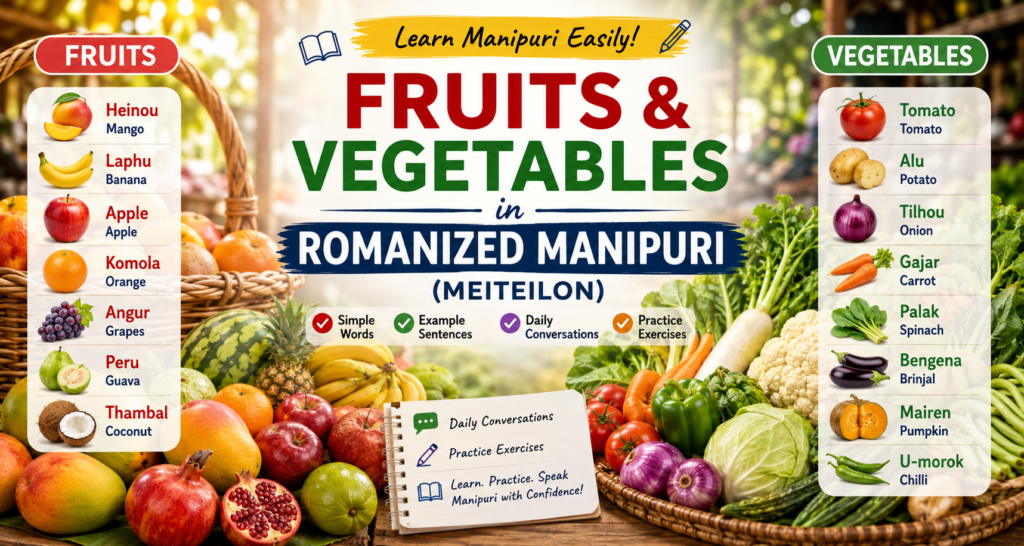
Food Vocabulary in Manipuri
Food words are among the most commonly used vocabulary.
|
English |
Romanized Manipuri |
|---|---|
|
Rice |
Chak |
|
Water |
Ishing |
|
Tea |
Cha |
|
Milk |
Thabāl |
|
Fish |
Nga |
|
Meat |
Sa |
|
Egg |
Yāi |
|
Salt |
Thum |
|
Sugar |
Chini |
Example sentences:
-
Ei chak chaore.
-
I eat rice.
-
-
Ishing piba.
-
Drink water.
-
-
Cha ama pibiyu.
-
Please give me a cup of tea.
-
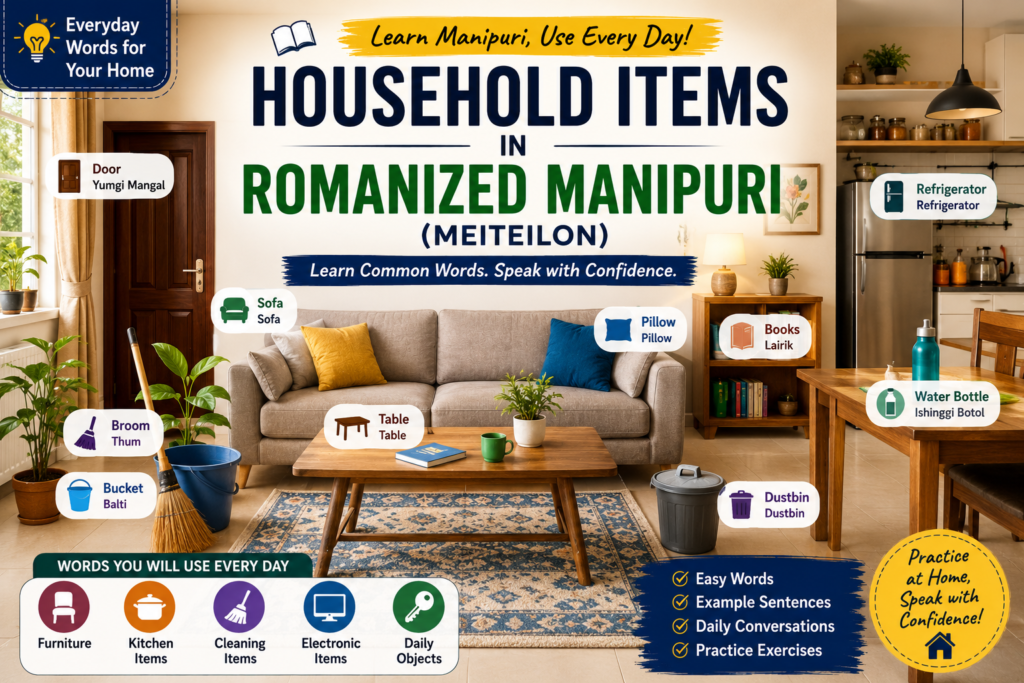
Household Vocabulary
These words are useful when talking about your home.
|
English |
Romanized Manipuri |
|---|---|
|
House |
Yum |
|
Door |
Thangba |
|
Window |
Thangjing |
|
Chair |
Chair |
|
Table |
Table |
|
Bed |
Yumpham |
|
Kitchen |
Chak-thokpham |
|
Bathroom |
Bathroom |
Example:
-
Ei yum da leire.
-
I am at home.
-
School Vocabulary
Students learning Manipuri should know these words.
|
English |
Romanized Manipuri |
|---|---|
|
School |
School |
|
Teacher |
Oja |
|
Student |
Tampham mi |
|
Book |
Lai |
|
Pen |
Pen |
|
Notebook |
Khudol lai |
|
Homework |
Yumgi thabak |
Example:
-
Ei school da chatli.
-
I go to school.
-
-
Oja na tammi.
-
The teacher teaches.
-
Common Action Words in Manipuri
Action words, or verbs, help you make sentences.
|
English |
Romanized Manipuri |
|---|---|
|
Eat |
Cha |
|
Drink |
Piba |
|
Go |
Chatpa |
|
Come |
Lakpa |
|
Sleep |
Tumba |
|
Read |
Paba |
|
Write |
Iba |
|
Speak |
Haiba |
|
Listen |
Taba |
|
Work |
Thabak touba |
Example sentences:
-
Ei lai palli.
-
I read a book.
-
-
Ei pen na ibi.
-
I write with a pen.
-
-
Mahak yum da lakli.
-
He comes home.
-
Colors in Manipuri
Colors are useful for describing objects.
|
English |
Romanized Manipuri |
|---|---|
|
Red |
Angangba |
|
Blue |
Asangba |
|
Green |
Umanba |
|
Yellow |
Yeningba |
|
Black |
Amuba |
|
White |
Angangba |
Example:
-
Angangba phanek.
-
Red cloth.
-
-
Asangba shirt.
-
Blue shirt.
-
Body Parts Vocabulary
These words are useful in daily life and health conversations.
|
English |
Romanized Manipuri |
|---|---|
|
Head |
Kok |
|
Eye |
Mit |
|
Nose |
Khong |
|
Ear |
Khut |
|
Mouth |
Tham |
|
Hand |
Khut |
|
Leg |
Khong |
Example:
-
Eigi mit yamna na.
-
My eyes hurt.
-
Common Question Words
Question words help you communicate more effectively.
|
English |
Romanized Manipuri |
|---|---|
|
What? |
Kari? |
|
Who? |
Kanano? |
|
Where? |
Kadaida? |
|
When? |
Karamna? |
|
Why? |
Kari gidamak? |
|
How? |
Karamna? |
Example sentences:
-
Nang kadaida chatlibra?
-
Where are you going?
-
-
Mahak kanano?
-
Who is he?
-
-
Nang kari toure?
-
What are you doing?
-
Daily Use Expressions
Here are some practical expressions that beginners can use.
|
English |
Romanized Manipuri |
|---|---|
|
I am fine. |
Ei phajare. |
|
How are you? |
Nang karamna leire? |
|
I am going. |
Ei chatli. |
|
Come here. |
Masi lak-u. |
|
Wait. |
Ngairu. |
|
Please sit. |
Phambiyu. |
|
I don’t know. |
Ei khangde. |
Practice speaking these sentences aloud every day.
How to Learn Manipuri Vocabulary Effectively
Learning vocabulary is easier when you practice regularly.
Learn Five Words Every Day
Don’t try to memorize too many words at once. Learn five new words daily and review them the next day.
For example:
-
Day 1: chak, ishing, cha, nga, sa
-
Day 2: yum, thangba, chair, table, lai
-
Day 3: ima, mapa, ichou, ichin, macha
Small daily practice leads to long-term progress.
Use Words in Sentences
Don’t memorize words alone. Try making short sentences.
Instead of only learning chak = rice, say:
-
Ei chak chaore.
-
I eat rice.
-
Instead of only learning ishing = water, say:
-
Ei ishing pibire.
-
I am drinking water.
-
Using words in context helps you remember them faster.
Listen and Repeat
Listen to native Manipuri speakers whenever possible. Repeat the words aloud to improve pronunciation.
You can practice by:
-
Watching Manipuri videos
-
Listening to conversations
-
Reading Romanized lessons aloud
-
Repeating common phrases
Keep a Vocabulary Notebook
Create a notebook with three columns:
|
English |
Romanized Manipuri |
Your Sentence |
|---|---|---|
|
Water |
Ishing |
Ei ishing pibire. |
|
Rice |
Chak |
Ei chak chaore. |
|
House |
Yum |
Ei yum da leire. |
Writing words by hand helps improve memory.
Building vocabulary is one of the easiest and most effective ways to learn Manipuri. Start with everyday words such as greetings, family members, food, numbers, household items, and common action words.
Romanized Manipuri makes it easier for beginners to read and pronounce words without needing to learn the script immediately. As your vocabulary grows, you’ll become more confident in understanding conversations and speaking simple sentences.
At LearnManipuri.in, you can continue learning new vocabulary every day and gradually build a strong foundation in the Manipuri language.
Start with five words today, practice them in sentences, and keep adding new words each week. With regular practice, you’ll be able to understand and speak Manipuri more naturally.